
Your Cart is Empty
No need to buy OEM and pay 2x the price.
Nilfisk Advance VA75006, Pick-up tool mounting plate
FactoryCat/Tomcat 290-234A, Spare Key Set of 2 Keys
Glad I was able to purchase this item.
Free Shipping on Parts Orders Over $99
Free Shipping on Parts Orders Over $99

August 06, 2026 6 min read
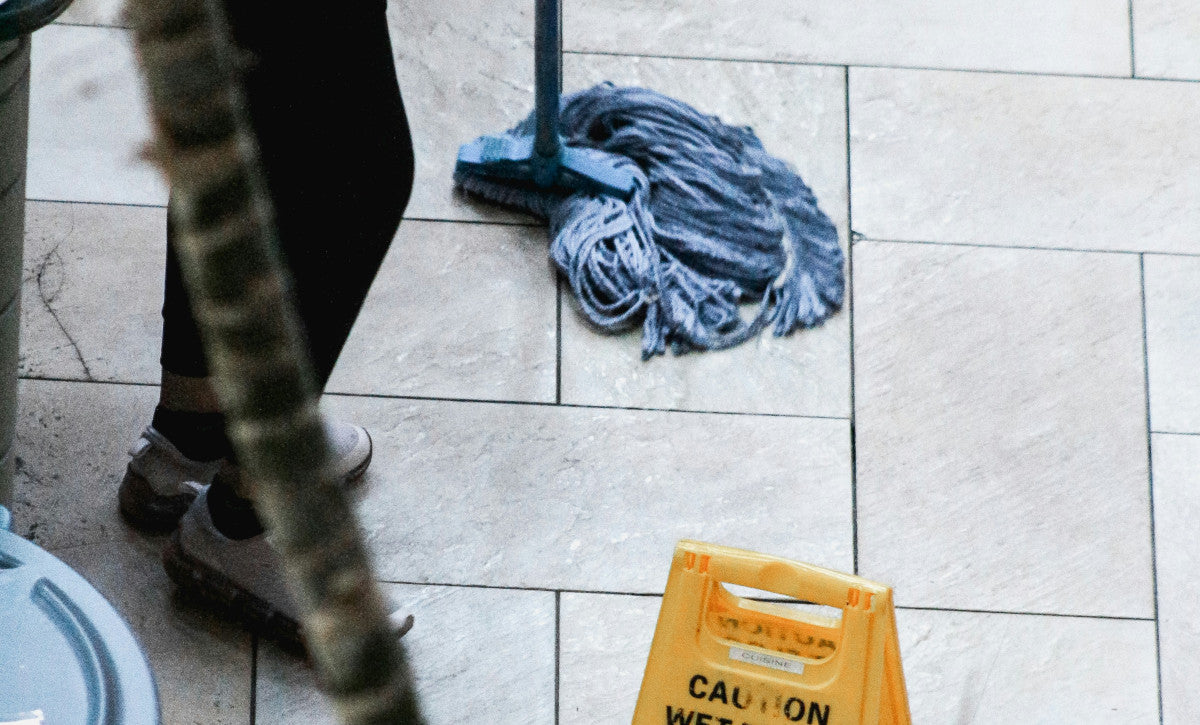
There’s nothing more frustrating than spending hours cleaning your commercial facility only to be greeted by sticky floors after mopping. So why is my floor sticky after mopping?
The truth is, mopping was never the best way to clean your flooring. All it does is spread the mess around rather than actually lifting it. Yes, even with the two-bucket mop method. It’s a subpar cleaning technique compared to the many different types of floor cleaning machines.
Learn how to get rid of sticky floors after mopping below by working smarter instead of harder with a commercial floor scrubber. These machines leave your floor pristine by scrubbing, squeegeeing, and vacuuming the solution in a single pass. It’s the best investment you can make in your commercial floor care arsenal!
Sticky floors after mopping are unfortunately quite common. Although it could be a handful of culprits, it can usually be traced back to one thing. So, why is my floor sticky after mopping in most cases? It’s the mop itself to blame.
Mop water is gross. What started as a bucket of fresh solution becomes a concoction of chemicals, dirt, and water as soon as you stick your mop back in it. At that point, you’re merely putting the dirt back into the flooring with each dip.
The solution, of course, is to have two separate buckets. One for your cleaning solution, the other for wringing out your dirty mop and rinsing the mop bristles. But even then, the practice of mopping is inherently flawed. Some of the mess gets trapped within the mop as you scrub the floor. But a good portion of it just gets ground deeper into the floor and moved around.
That’s why you may want to consider alternatives to mopping floors, such as commercial floor scrubbers. They pay for themselves by saving you labor while getting you better results.
There are, of course, other possible reasons you could find the floor sticky after mopping. These are some additional culprits you could point the finger at.
This is one of the most common misconceptions we see made as it pertains to commercial cleaning. People think more cleaner is better. Surely extra chemical support will help with tougher messes, right? Not at all. In fact, the opposite is true in many cases.
Excess detergent just leaves behind a surfactant film on the floor. It dries and quickly begins attracting moisture and dirt. That nasty symphony of grime and chemicals comes together in the form of stickiness. Always stick to the recommended dilution ratio for your cleaning agent.
Cleaning chemicals still need to be removed from the floor, even at the optimal dilution ratio. Wait, there’s a rinse step with mopping? Yeah, and most people don’t even know it! You add another layer of residue on top of the last each time you mop without rinsing. The buildup is a magnet for new soil.
Whether you’re cleaning a commercial kitchen or a factory, grease is a particularly troublesome mess. General-purpose cleaners just aren’t capable of contending with it. A neutral cleaner might loosen someof the mess but will leave most of it behind.
This means your mop is really just moving that grease around the floor, spreading it thinly across the entire facility. Now the floor feels even stickier than it did before!
This leads us to our next point…
There are two things you need to think about when choosing a cleaning agent:
Alkaline cleaners make quick work of greasy floors, but they can cause more harm than good on VCT with a wax finish. That finish gets softened and turns tacky, then collects dirt faster than it used to.
Hard water is going to put you behind the 8-ball while mopping because its mineral content (calcium and magnesium) reacts with soap. They come together and form this insoluble film that sticks to your floor and stays there until you clean it. The harder your water, the stickier your floors.
I’ve done everything right - so why is my floor sticky after mopping?At the end of the day, some flooring is just more finicky. A few in particular we’ve struggled with ourselves are textured ceramic tile and unsealed concrete. The reason being, these types of floors have microscopic pores and grout lines that serve as the perfect hiding places for detergent and soil.
On the other hand, smooth surfaces (think VCT or sealed concrete) rinse away seamlessly. In some cases, you’ll just have to work a little harder because of your flooring.
So you found your floor sticky after mopping. Why it’s that way doesn’t really matter right now…you just need to fix the issue! You can worry about correction later, right?
Well, not exactly. Trying to re-mop your floors and hoping that solves the problem is just wasted effort. Because as we said from the get-go, the root cause of sticky floors after mopping ultimately comes down to the mop itself in many cases. That’s why our advice on how to get rid of sticky floors after mopping is ditching the mop for good.
Whether you upgrade to a walk-behind floor scrubber for tighter spaces or an industrial floor scrubber ride on for expansive layouts, this is one of the best investments you can make.
These machines don’t redistribute dirty soil around on the floor. Because the mess actually gets sucked up into a separate recovery tank through a vacuum system. The solution tank puts down a fresh cleaning agent, the brushes/pads scrub it into the floor, and then, the squeegee and vacuum system collect it separately.
This is how a floor scrubber is able to leave your floors clean and dry in a single pass, saving time while getting better results. They pay for themselves faster than you’d think!
SweepScrub is the #1 choice for a commercial floor scrubber, as we stock all the top brands and their most popular models. We even have our own private label line of machines if you want the best value for your money. Get in touch today and we’ll help you find the right solution.
If you do prefer the mop for whatever reason, there are still things you can do to avoid constantly finding your floor sticky after mopping.
First tip on how to get rid of sticky floors after mopping - do another pass. This time, using nothing but warm, clean water. No cleaning agent. Change the water regularly so you’re not just spreading the same residue again.
You can also improve your water quality going forward by strictly using two buckets, and potentially looking into a water softener for your main source of water.
But at the end of the day, there’s no better way to care for your commercial flooring than with a sophisticated machine. From small 10” models to massive 36” ride-on machines, there’s something for you at SweepScrub.
In closing, why is my floor sticky after mopping? Because mops aren’t all they’re cracked up to be!These just spread around dirty water. Aside from the mop itself, it could be excess detergent, hard water, poor rinsing, or the wrong cleaner.
We hope you feel confident in how to get rid of sticky floors after mopping now. Shop the selection at SweepScrub or get in touch today to transform your cleaning regimen.
Because mops just spread the mess around. To make matters worse, many people use excessive cleaning chemicals (or the wrong cleaning chemicals).
Follow up with a warm water rinse. This will help dissolve that film on the top of your floor.
Upgrade to a floor scrubber, or even better, a floor sweeper scrubber! These won’t leave your floor sticky because they scrub, rinse, and vacuum the water up in a single pass.
We recommend a pH-neutral, low-residue formula. The only time you need an alkaline cleaner is when you’re dealing with grease on a smooth floor. Remember to adhere to the proper dilution ratio, too.
How to mop commercial floors | Is scrubbing the floor better than mopping?
Sign up to get the latest on sales, new releases and more …
No need to buy OEM and pay 2x the price.
Nilfisk Advance VA75006, Pick-up tool mounting plate
FactoryCat/Tomcat 290-234A, Spare Key Set of 2 Keys
Glad I was able to purchase this item.
Fit perfectly and works just like OEM. Very pleased !